제품
제품

How to Select a Casing Hanger Seal for Oil & Gas Wellheads?

How to Select a Casing Hanger Seal for Oil & Gas Wellheads?

  • July 29. 2026

Selecting the right casing hanger seal is an important part of designing or maintaining an oil and gas wellhead. The seal must maintain pressure integrity between the casing and wellhead components while accommodating the actual dimensions, surface condition, pressure, temperature, and well fluids involved.


A seal that matches the nominal casing size may not necessarily be the right choice. In practice, casing dimensions, sealing clearance, surface finish, pressure, temperature, and elastomer compatibility all influence sealing performance.


So, how do you select the right casing hanger seal for an oil and gas wellhead?


What Does a Casing Hanger Seal Need to Do?

A casing hanger seal creates a pressure barrier between the casing and the surrounding wellhead components. Its primary purpose is to help isolate the casing annulus and prevent pressure or well fluids from passing through the sealing interface.


The exact seal design depends on the wellhead configuration. FS Seals, P Seals, S Seals, elastomeric seals, and metallic sealing systems may be used in different casing or tubing hanger arrangements.

This is why selecting a casing hanger seal should start with the equipment and sealing location, rather than simply choosing a seal based on its name or nominal size.


1. Start With the Casing and Wellhead Dimensions

The first step is to identify the dimensions of the existing equipment.

Important information includes:

· Casing outside diameter

· Seal inside and outside diameter

· Seal groove dimensions

· Radial clearance

· Groove depth and width

· Casing dimensional tolerances

· Existing seal dimensions


These parameters determine whether the seal can achieve sufficient contact with the casing and wellhead housing.


For replacement applications, relying only on the casing nominal size can be risky. A drawing or existing seal sample provides much more useful information for confirming the actual sealing geometry.


2. Consider Casing Surface Condition

Casing is not always an ideal sealing surface.


Depending on the equipment and installation conditions, the casing may have:

· Relatively rough surface finishes

· Dimensional variation

· Out-of-round sections

· Larger geometrical tolerances

· Clearance variations between mating components


These conditions can affect how consistently an elastomer maintains contact with the casing.

This is one reason certain casing hanger seal designs are developed specifically for wellhead applications involving rough casing surfaces and wider dimensional or geometrical tolerances.


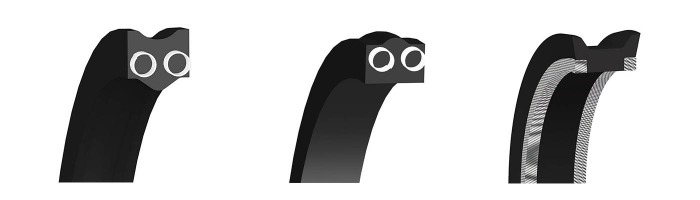
For example, FS Seals are designed as static casing and tubing hanger seals for wellheads and are specifically intended to accommodate rough casing surfaces and larger clearances.


3. Check the Working Pressure

Pressure is another major factor when selecting a casing hanger seal.


Don't look only at the equipment's nominal pressure rating. Consider the actual sealing conditions, including:

· Normal working pressure

· Maximum differential pressure

· Pressure cycling

· Pressure fluctuations

· Pressure direction

· Clearance around the seal


High differential pressure can increase the risk of elastomer extrusion, particularly when there is a larger gap between the sealing surfaces.


For this reason, the anti-extrusion design of the seal should be evaluated together with pressure and clearance.


FS Seals, for example, use integrated anti-extrusion springs designed to help protect the elastomer in high-pressure wellhead applications.


4. Match the Seal Material to Temperature and Well Fluids

The seal material should be selected according to the complete operating environment, not temperature alone.


Typical elastomer options for oil and gas wellhead sealing include:

NBR

A common choice for general oil and gas applications where pressure, temperature, and media conditions fall within its suitable operating range.


HNBR

Often considered for more demanding temperature, mechanical, and oilfield service conditions.


FKM

Can be considered when higher-temperature performance and chemical resistance are required.


FFKM

Used for particularly demanding chemical and temperature environments where a higher-performance elastomer is justified.


The actual choice depends on factors such as:

· Operating temperature

· Oil and gas composition

· Water exposure

· H₂S or CO₂ exposure

· Chemical additives

· Pressure

· Required service life


Material compatibility should therefore be evaluated together with the seal geometry.


5. Evaluate the Anti-Extrusion Design

A casing hanger seal operating under high pressure needs sufficient resistance to extrusion.


When differential pressure acts on an elastomer, the material can be forced toward the clearance gap between mating components. If the gap is large enough, repeated pressure cycles can eventually damage the seal.


Depending on the seal design, anti-extrusion protection may come from:

· Integrated springs

· Backup rings

· Reinforced sealing structures

· Metallic support components


For example, the FS Seal uses integrated springs as anti-extrusion elements. A P Seal, on the other hand, can use backup rings to support the elastomer under pressure. JST's P Seal design uses backup rings available in mesh stainless steel or solid carbon steel.


The appropriate configuration depends on the wellhead design, clearance, pressure, and sealing requirements.


6. Choose the Seal Design According to the Wellhead Configuration

There is no universal casing hanger seal that is suitable for every wellhead.

Different designs may be selected according to the equipment configuration.


FS Seal

An FS Seal is a spring-energized static seal developed for casing and tubing hanger applications. Its design is particularly suitable for wellhead assemblies where rough casing surfaces, larger clearances, or wider dimensional and geometrical tolerances need to be accommodated.


P Seal

A P Seal uses an elastomer sealing element with anti-extrusion backup rings. In JST's design, the seal is energized by injected sealant and is used in the lower sealing area of casing spools or tubing heads.


It can be considered when the equipment requires a sealant-energized sealing solution with anti-extrusion support.

S Seal and Other Designs

Other casing or tubing hanger seal designs may also be used depending on the original equipment configuration.

The important point is that one seal profile should not be substituted for another simply because the dimensions appear similar.

The groove, compression, clearance, pressure direction, and energizing mechanism all need to be compatible with the equipment.


7. Consider the Installation Method

Installation requirements can also influence seal selection.


Before choosing a replacement, determine:

· How the seal is installed

· Whether the seal requires sealant injection

· Whether backup components are loose or integrated

· Whether the casing is stabbed through the seal

· Whether special installation tools are required

· Whether the seal can be replaced without major equipment modification


For example, FS Seal designs can use an integrated anti-extrusion structure, avoiding separate loose anti-extrusion components during installation. Industry sources also describe FS Seals as single-piece designs that do not require post-installation pack-off operations.


This can be an important consideration when replacing an existing seal in the field.


8. When Should You Consider a Custom Casing Hanger Seal?

A standard seal may be sufficient when the equipment follows an established configuration and the operating conditions fall within the design range.


A custom casing hanger seal may be worth considering when:

· The casing dimensions are non-standard

· The existing seal is obsolete

· The original seal is no longer available

· The groove dimensions are unusual

· The casing surface is particularly rough

· Clearance is larger than expected

· Pressure or temperature requirements are demanding

· A specific elastomer compound is required

· The existing seal has experienced leakage or extrusion


For these applications, customization does not necessarily mean creating an entirely new seal profile. It may involve selecting the appropriate dimensions, elastomer, spring or backup configuration, and sealing geometry for the equipment.


What Information Do You Need to Select a Casing Hanger Seal?

When contacting a seal manufacturer, the following information is useful:

Equipment Information

· Casing head or tubing head

· Casing hanger type

· Wellhead model or OEM

· Sealing location


Dimensional Information

· Casing OD

· Seal ID/OD

· Groove dimensions

· Clearance

· Existing seal drawing or sample


Operating Conditions

· Working pressure

· Maximum pressure

· Operating temperature

· Pressure cycling


Media

· Oil

· Gas

· Water

· H₂S / CO₂ exposure

· Other chemicals


Existing Problems

· Leakage

· Extrusion

· Seal damage

· Difficult installation

· Short service life


A seal drawing or physical sample is especially helpful for custom development, because it allows the manufacturer to evaluate the original sealing geometry rather than making assumptions from the nominal casing size.


Casing Hanger Seal Selection Checklist

Before ordering a seal, check these key parameters:

Factor

What to Confirm

Sealing location

Casing hanger/wellhead interface

Casing size

Actual casing OD

Seal dimensions

ID, OD, cross-section

Groove

Width, depth, geometry

Clearance

Maximum sealing gap

Surface

Roughness and dimensional variation

Pressure

Working and differential pressure

Temperature

Minimum and maximum

Media

Oil, gas, water, chemicals

Material

NBR, HNBR, FKM, FFKM, etc.

Anti-extrusion

Spring, backup ring, or other support

Installation

Compression, sealant energization, etc.

Documentation

Drawing, sample, equipment data


Conclusion

Selecting the right casing hanger seal for an oil and gas wellhead requires more than matching the seal to the nominal casing size.


The most important factors are the sealing location, casing dimensions, surface condition, clearance, pressure, temperature, well fluids, material compatibility, and anti-extrusion design.


For wellhead applications involving rough casing surfaces or larger dimensional tolerances, designs such as FS Seals may offer advantages. Other configurations may require P Seals, S Seals, or different sealing technologies depending on the equipment design.


The safest approach is to select the seal according to the original wellhead configuration and actual operating conditions, rather than assuming that a similar-looking seal will provide the same performance.


If the application involves non-standard dimensions or an existing sealing problem, providing a drawing or seal sample together with pressure, temperature, media, and casing information gives a seal manufacturer the best starting point for developing a suitable solution.


© 저작권: 2026 Guangzhou JST Seals Technology Co., Ltd. 판권 소유.

粤ICP备12032262号 IPv6 네트워크 지원

IPv6 네트워크 지원

상단

메시지를 남겨주세요

메시지를 남겨주세요

    우리 제품에 관심이 있고 자세한 내용을 알고 싶다면 여기에 메시지를 남겨주세요. 가능한 한 빨리 회신 해 드리겠습니다.

  • #
  • #
  • #